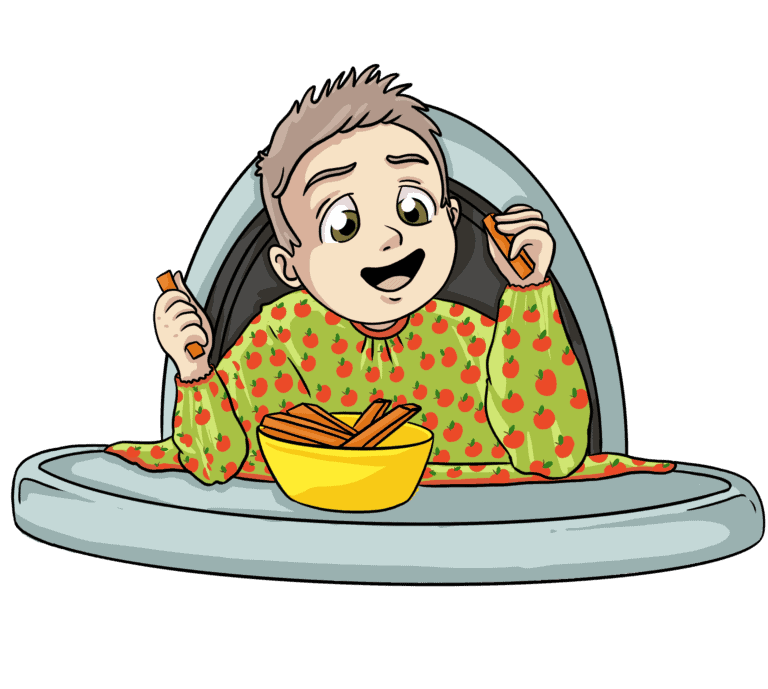
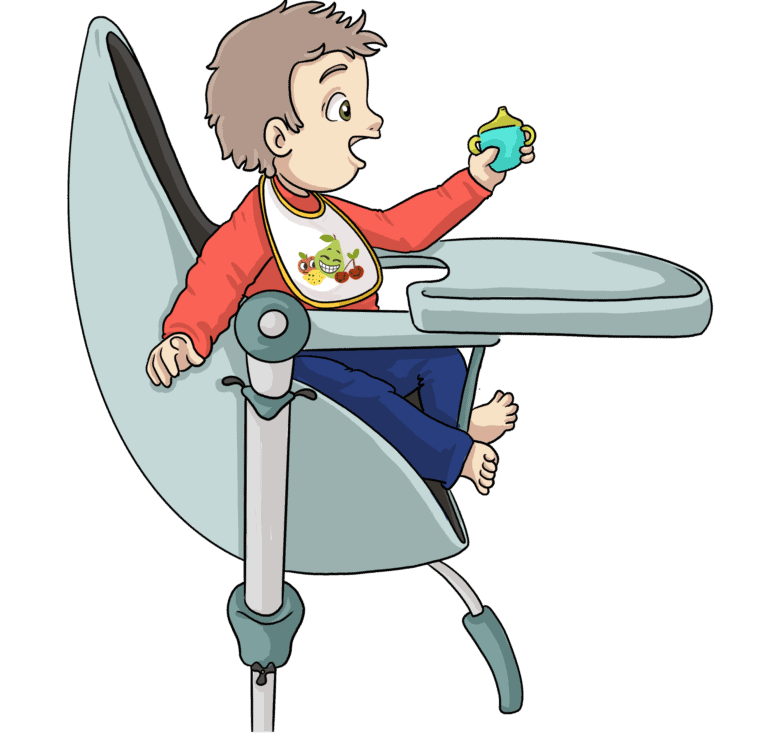
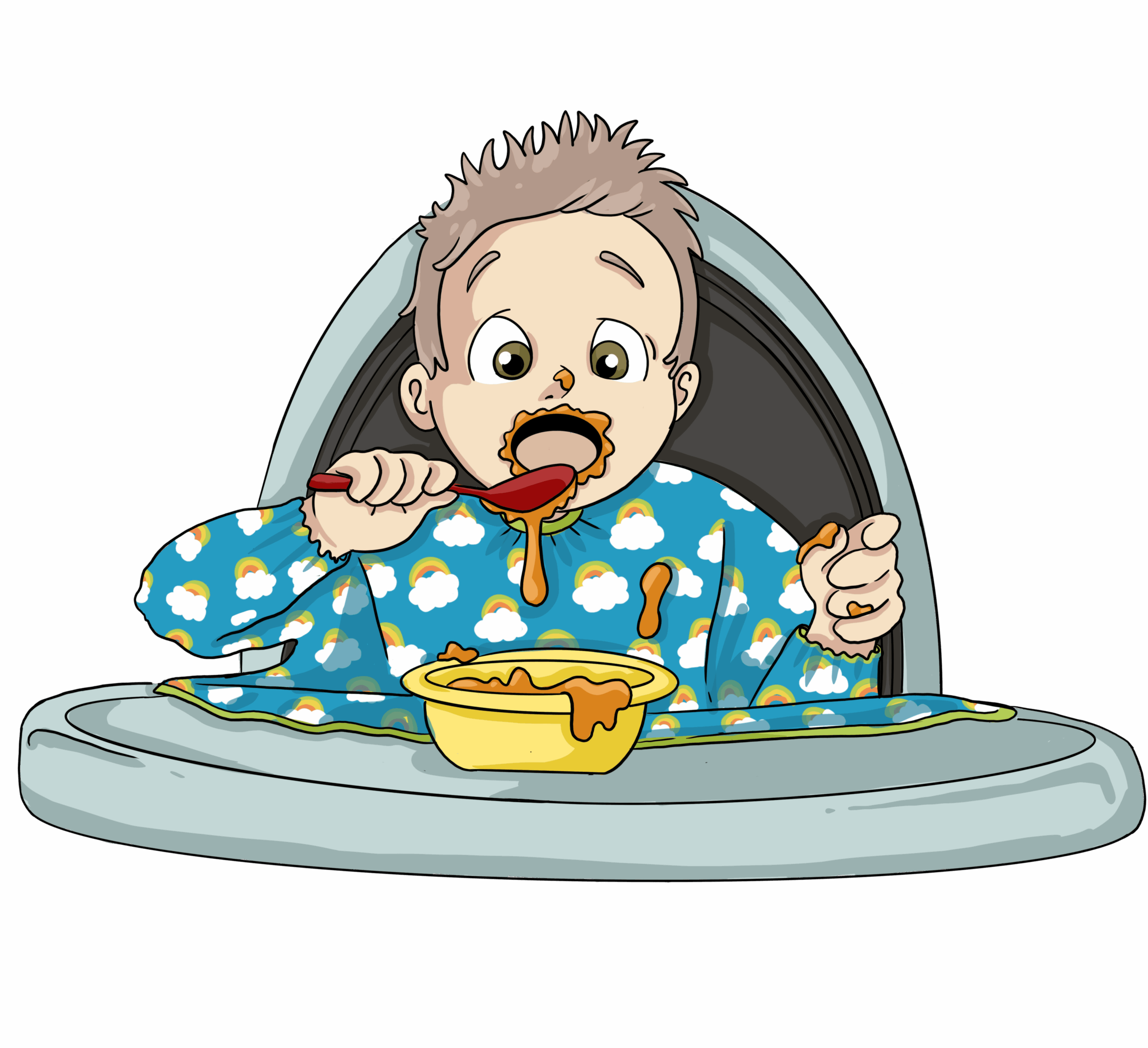
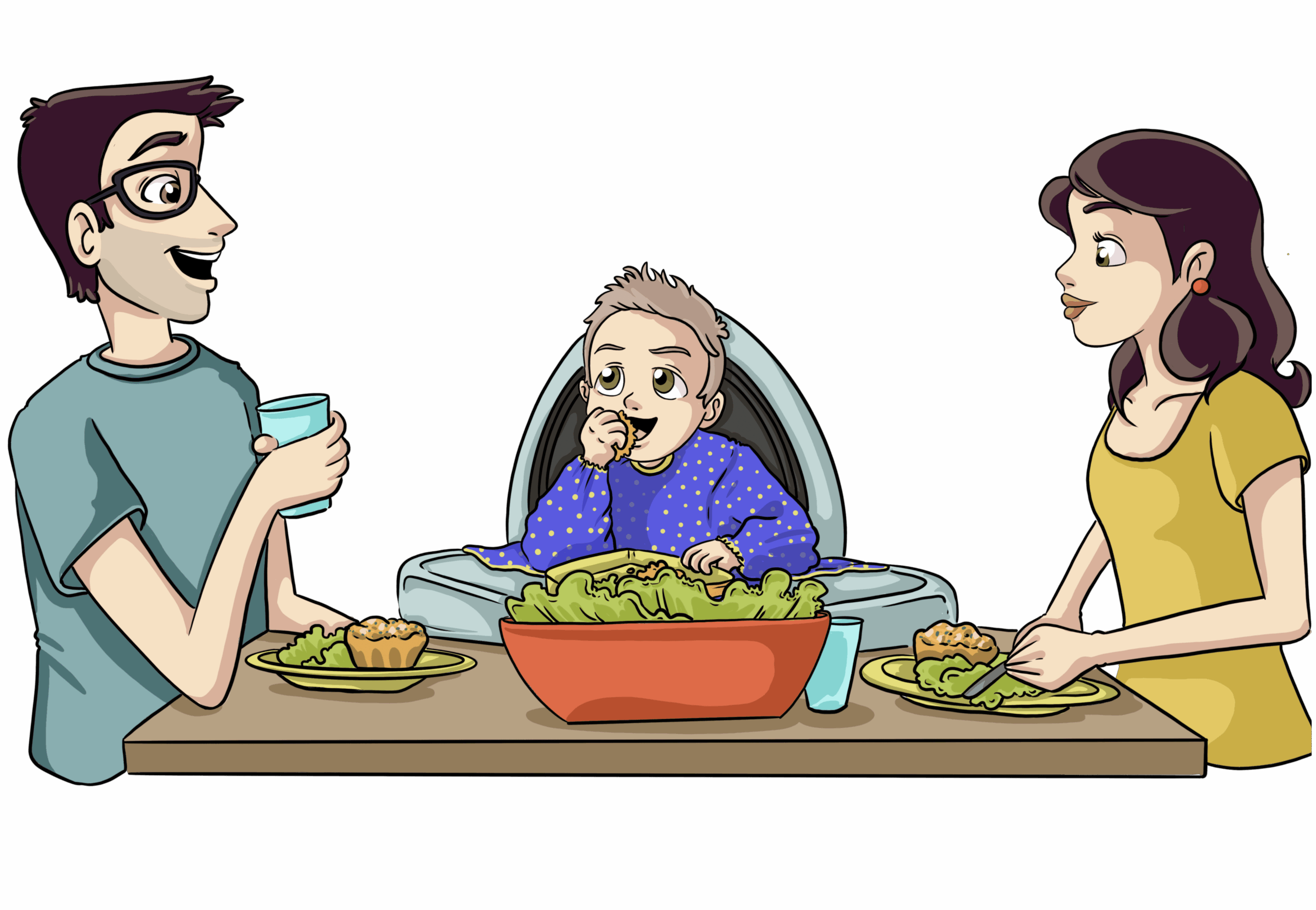
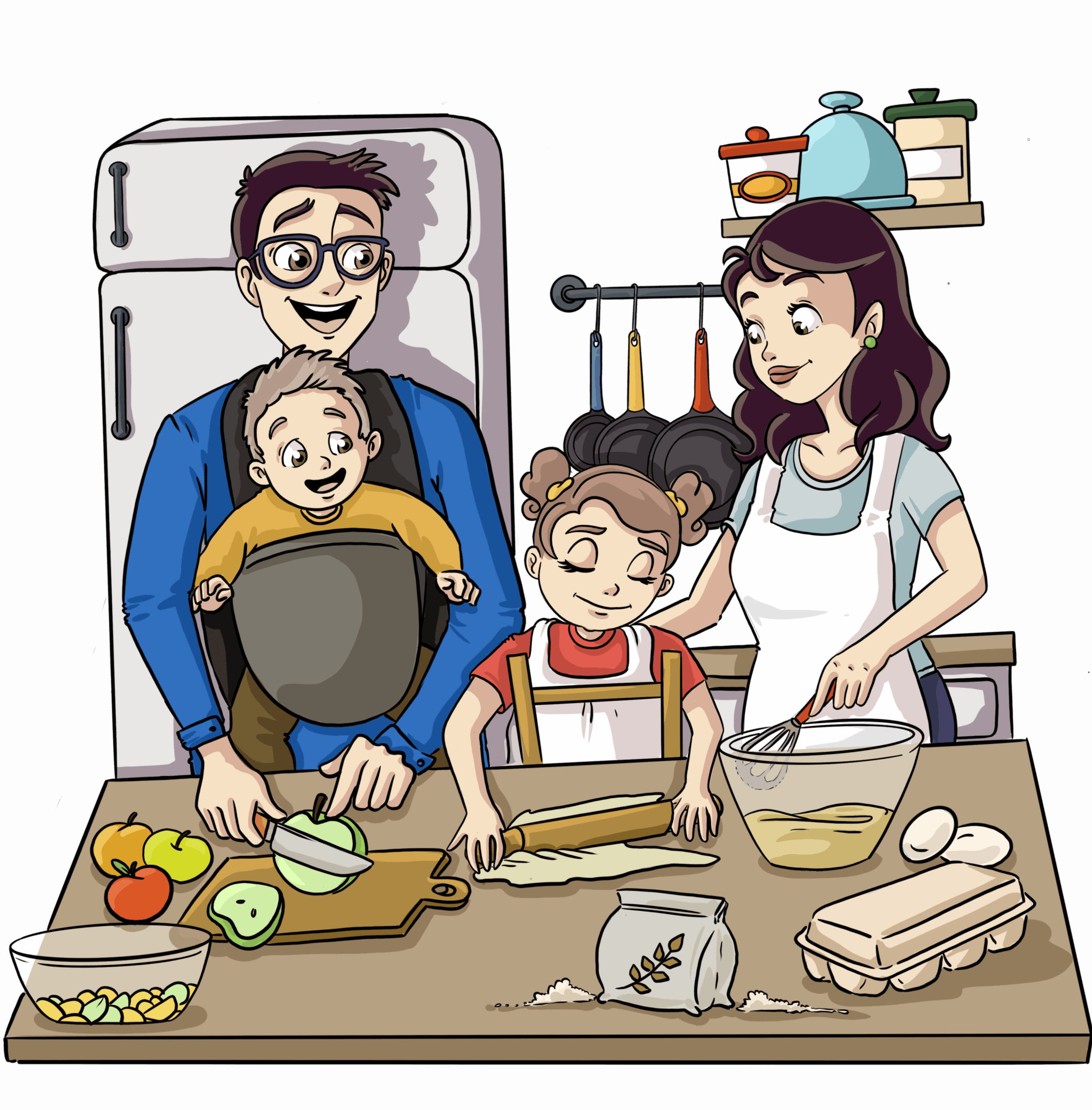
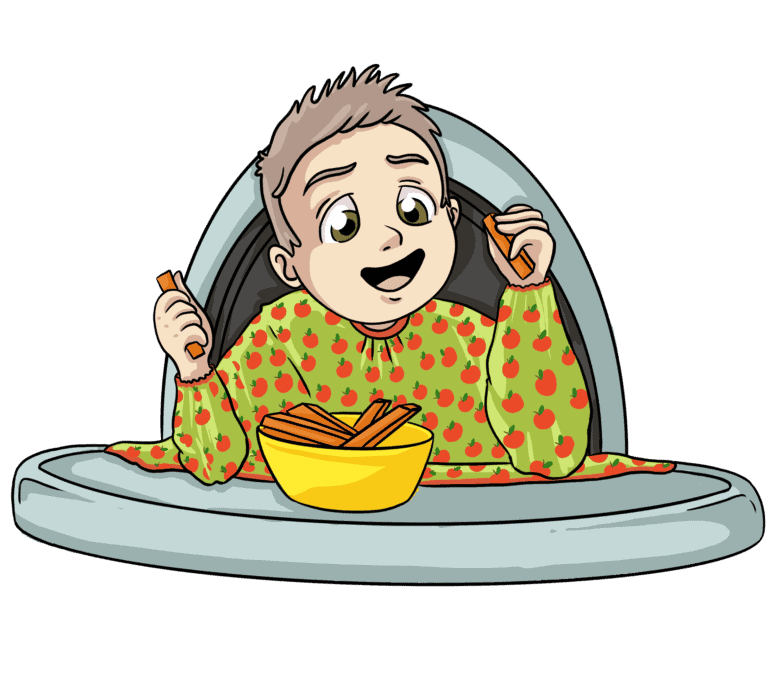
BLW BLW is a different approach to traditional weaning: we move away from traditional purees and spoon-fed baby food, allowing babies to discover foods independently. Of course, babies can still eat purees and other smooth textures, but we change how we present them (using carriers or pre-filled spoons). Because in BLW, babies are active participants in their meals, bringing the food to their mouths and controlling the portions. Our role? To offer healthy and varied foods in safe formats and prioritize homemade meals to avoid added sugar in baby food.
BLW is therefore not just about giving baby pieces of food, it's much broader than that: It's a true food philosophy!
We can't stress this enough: every child is different. Age guidelines should always be taken with a grain of salt, but here are a few criteria to help you determine when your baby is ready to start BLW :
Baby is 6 months old and he can now sit up straight when he is sitting in his chair.
He can turn his head from left to right and bring objects to his mouth by himself.
When talking about BLW , there are often two recurring reservations among parents.
First, the fear of choking. Rest assured, you will always offer foods with textures and sizes adapted to your baby's abilities. Studies also show that there is no greater risk of choking with traditional weaning than with BLWWheat). We often tend to confuse the feeling of choking with the well-known gag reflex, which can sometimes be quite alarming.
Secondly, parents often worry that their baby won't eat ! However, during the period of food discovery, this is perfectly normal! Babies will focus on exploring food with their five senses and will initially put very little food in their mouths. But don't worry, between 6 and 8 months, milk covers more than 80% of their energy needs. So, even if your baby eats little, or almost nothing, their energy needs will be met.
Introducing solid foods is a major milestone in a baby's life, but also in the lives of parents! Each stage brings its own set of stresses and questions:
As with everything, the hardest part is getting started! The beginning will undoubtedly be challenging, and your baby may take some time to adjust, but remember that every child develops at their own pace , and that's perfectly normal. When starting out, you'll certainly ask yourself some questions, such as:
Have you finished your starter menu? Don't expect to go back to purees and purées. Baby is now having so much fun eating that they'll want to discover new textures, new foods, new flavors…
No more spoon-feeding! Mealtimes have become a playful and exploratory experience, and you'll see it's just as fun for you as it is for your baby! To continue sharing great recipes with your little one, subscribe to access all our recipes.
While making all these new recipes, you will probably still ask yourself some questions such as: