There's everything you do when you become a parent. And then there's everything you think about to get things done.
Remember to buy more diapers. Check what's left in the fridge. Pack the bag for tomorrow. Remember the appointment. Plan the next meal. Realize the baby is out of frozen portions. Think about the clothes that are now too small… all while replying to a message and trying to find that cup of coffee I made two hours ago. 😅
Much of this organization is almost invisible. Yet, it takes up space in the mind.
And baby meals can quickly add a new, permanent little voice: "What am I going to feed him/her?"
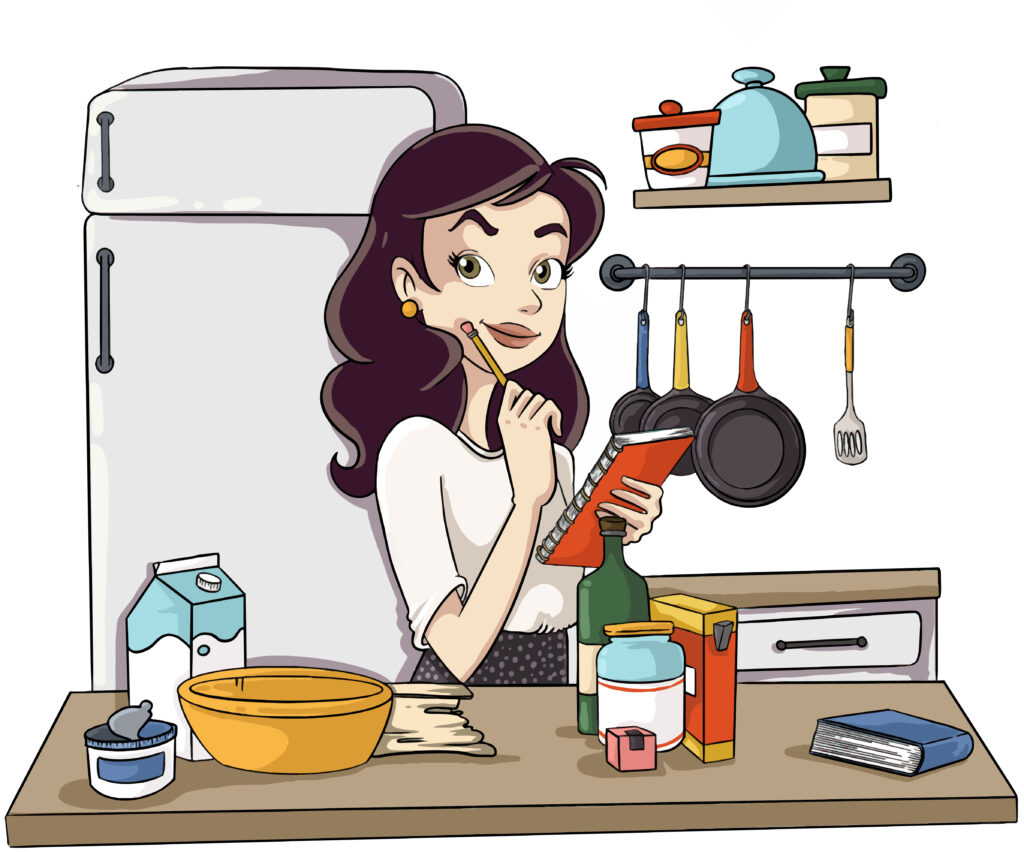
Mental load isn't just about doing things
Grocery shopping is a chore.
But before going shopping, someone often had to check what was left, think about the next meals, consider the necessary ingredients and realize that there was no more flour for tomorrow's pancakes.
This is the part that easily goes unnoticed.
Mental load therefore does not come solely from the number of things we do. It also comes from having to think, anticipate, organize, decide and remember.
With a baby, this little machine is running almost constantly because their needs change so quickly. An organization that worked perfectly two weeks ago may already need to be revised today.
Meals add up to a lot of small decisions
Even before the baby, "what's for dinner?" was sometimes a tiresome question at 6:30 pm.
With diversification, it can suddenly contain ten additional sub-questions.
Is this suitable for a baby? What texture should I offer? Has he eaten this food before? Have I varied his diet enough this week? What's left in the fridge? Can I give him part of our meal? Does this recipe freeze well? Do I need to prepare anything else for tomorrow?
None of these decisions are huge when made individually.
But when repeated several times a day and several days a week, they end up taking up a lot of space.
That's precisely why we dedicated an entire article to the question: No longer wondering every day what to offer baby in BLW.

What's tiring is having to do it all over again every day
A decision made once does not seem particularly burdensome.
But having to make the same decision again tomorrow, then the day after tomorrow, then Thursday evening when everyone is tired… that’s another story.
This is where some small organizational methods become interesting. Not to become the perfectly organized parent with fourteen color-coordinated boxes in the fridge, but simply to avoid solving the same problem every day.
A menu planned once can replace five moments of "what's for dinner?".
A recipe prepared in duplicate can solve a future meal problem.
A few portions in the freezer can save the day on an evening when no one feels like cooking.
We have compiled several simple tips in our article How to organize weekly meals when school starts again?
Organizing doesn't mean planning for everything
There is also a small trap: wanting to lighten one's mental load... by creating an organization so ambitious that it itself becomes a new mental load.
Planning meals can help.
Precisely planning every breakfast, meal, snack, quantity and recipe for seven days is not mandatory.
You can simply plan a few general outlines and leave room for what's left in the fridge, the baby's appetite, and especially your energy level.
A week can perfectly contain a new recipe, a family meal adapted for baby, something from the freezer and a very simple solution prepared in a few minutes.
Simplifying is just as important as getting organized.
Baby doesn't need a different meal every time
This is probably one of the ideas that can most lighten the load on everyday life.
Baby does not necessarily need a dish specially cooked for him while the rest of the family eats something else.
Depending on their age and abilities, many family meals can be adapted: the texture, format, some ingredients and seasoning can be adjusted if necessary.
Instead of thinking:
"What am I going to cook for us?"
then
"What am I going to cook for the baby?"
We can gradually try to think about a communal meal that can be adapted.
One decision instead of two is already one less mental burden.
The freezer can become a second memory
There are days when we have time and days when we absolutely do not.
When you prepare a recipe that freezes well, making a few extra portions allows you to gradually create a small reserve.
No need to dedicate your entire Sunday to batch cooking if this method doesn't suit you.
Preparing six pancakes instead of three, a few extra muffins or doubling a recipe is enough to build up a small stock over time.
If this way of working appeals to you, you can find our advice in Batch cooking for baby's meals.

Having "zero-think" meals is perfectly acceptable
Not everything has to be creative.
It can even be helpful to have a small mental or written list of very simple meals that you know by heart and that baby generally enjoys.
These are the solutions for days when your energy has vanished somewhere between laundry and a difficult bedtime. 😅
A few quick recipes, ingredients you often have at home, or pre-prepared portions can prevent you from having to search for a new idea at the very moment when your brain no longer wants to produce one.
This is precisely the whole idea behind our Essentials BLW Baby, and in particular Meals when you have zero ideas : having simple solutions on hand for days when inspiration doesn't come.

When the mental load spills over into the mealtime
The more you've had to think about the meal, the harder it can become to see your baby refuse it.
We looked for an idea, bought the ingredients, cooked, adapted the texture… and after three bites, baby decided that his mission for the day was to study gravity with a piece of broccoli.
The frustration is understandable.
But sometimes, it's not just the refusal that bothers us. It's everything that was behind the meal before it even arrived at the table.
Being aware of this can help distinguish what the baby is doing from how we feel after an already busy day.
We discuss this mechanism in more detail in When emotions come to the table: how to calm mealtimes with baby?
Reducing mental load doesn't necessarily mean doing less
Sometimes, all it takes is to decide less often.
Creating a few habits allows certain decisions to become automatic.
For example, always keeping some basics in the freezer, planning meals before shopping, cooking some recipes in double or having a few backup ideas can already make a real difference.
The goal is not to optimize every minute of family life.
It's more about recovering some of that mental energy spent constantly asking oneself the same questions.

What if the menu had already been designed for you?
This is precisely why weekly menus are part of BLW Baby.
With thesubscription BLW Baby, you get a new menu every week as well as access to the platform's recipes.
You can follow the menu, pick out just a few ideas, or adapt it to what you already have at home.
The goal is not to give you a new list of things to comply with.
It's more about removing a question from your list:
"What am I going to cook for him this week?"
Because BLW Baby unfortunately can't think about the daycare bag, start your washing machine, and book the pediatrician appointment for you. 😅
But when it comes to baby food, we can at least try to make you think a little less.
In summary
Being a parent is not just about changing a diaper, preparing a meal, or taking the baby to an appointment.
It also means thinking about when you'll need to buy the next size, anticipating the next meal, noticing that something is missing, planning, checking and starting all over again.
This invisible part of everyday life can take up a lot of space.
So when organization, a pre-prepared menu, or simply three portions in the freezer allow you to eliminate some decisions, it's not "cheating".
It's about clearing some space in your head.
And sometimes, one less question to ask yourself is worth a lot. 🤍