When a little being enters the family cocoon, we naturally try to organize ourselves as best we can.
And very quickly, a question arises:
👉 Is it better to feed the baby before... or at the same time as us?
For convenience, it might be tempting to feed your baby separately.
However, whether following a baby BLW or traditional weaning methods, eating at the same time as your baby plays a crucial role in their development.
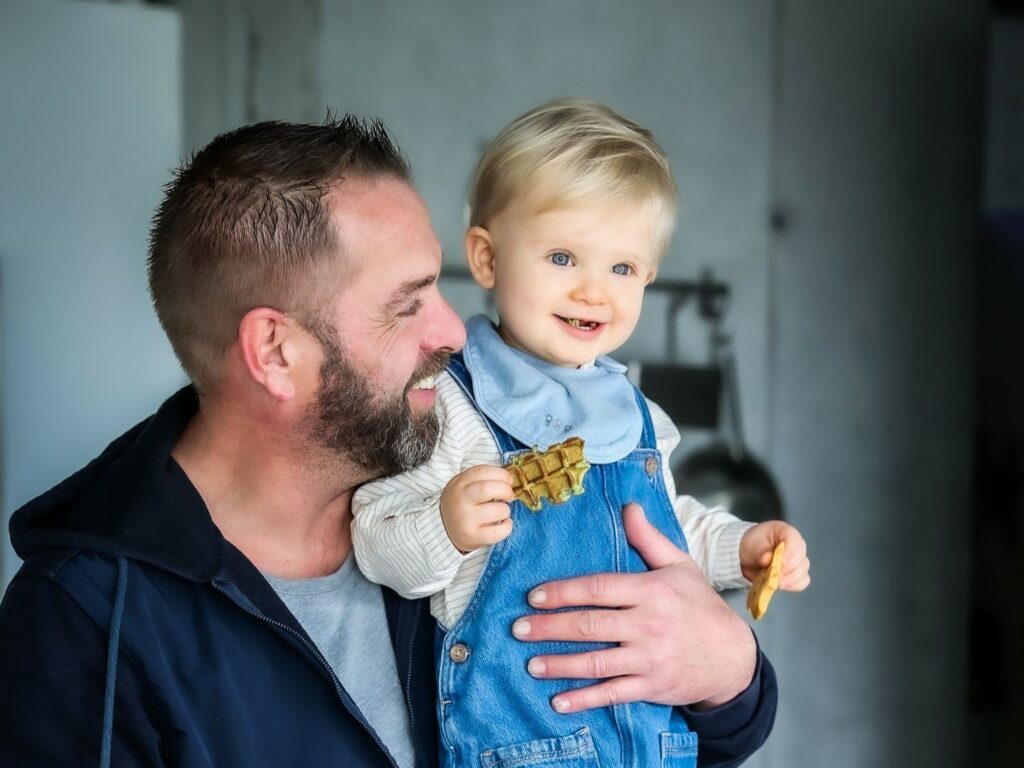
✨ Sharing a real moment as a family
Feeding baby at the same time as the rest of the family is much more than just a matter of organization.
It allows him to discover:
- moments of sharing
- the discussions around the table
- laughter
- family habits
Getting together after a day, even an imperfect one, creates simple but precious moments.
👉 These moments contribute to his balance and his sense of belonging.
Even if meals can sometimes be hectic or quick, they remain quality moments.
And if possible, extending this time with family by cooking together or preparing snacks can further strengthen this bond.
Photo: © Lune et l'autre
👶 Mimicry: a natural learning process
At the table, the baby is a true observer.
👉 He watches everything.
- the way you eat
- your gestures
- your reactions
- your way of tasting
Without you even realizing it, he's learning.
This is what is called mimicry.
Thanks to this, the baby will gradually:
- understanding how to bring food to your mouth
- reproduce the gestures
- dare to try new foods
👉 Watching others eat... naturally makes him want to try.
🥕 Promoting food acceptance
Sharing meals with baby also has a direct impact on their diet.
A baby who sees the whole family eating the same food will often:
- more curious
- more confident
- more inclined to taste
👉 He feels reassured.
It's no longer "something unknown"...
👉 but something that everyone eats.
It's a simple and natural way to encourage dietary diversity.

🍽️ Passing on table manners
When you eat with your baby, you are not just passing on food.
👉 You also show him how to behave at the table.
Little by little, he will integrate:
- stay seated
- drink water
- use your hands then your cutlery
- participate in the meal
Even small, everyday actions become learning opportunities.
And without pressure, the baby will try to reproduce what he observes.
✨ Practical tip: what if it's not always possible?
Because everyday life isn't always perfect 💛
👉 If you cannot eat at the same time:
- Seat your baby at the table with you, even if they have already eaten
- let him observe
- share part of the meal
- prioritize these moments as soon as possible
👉 What matters is not perfection… but consistency.
💛 Even when baby isn't eating
Sometimes babies eat very little... or not at all.
But he's here.
👉 He observes
👉 He listens
👉 He participates
And that's part of his learning.
In BLW , the meal is not just about the quantity eaten.
👉 It's also a time for discovery and connection.

🌿 In summary
Eating at the same time as your baby allows you to:
- create moments of sharing as a family
- promote learning through imitation
- encourage food discovery
- transmit natural habits
Of course, these guidelines apply to a healthy baby who is following their growth curve correctly.
💬 Key phrase to remember
Baby learns as much by watching you… as by eating.
An answer