Courgette is very often considered a vegetable, but it is actually a fruit! Let's discover together all its benefits for baby's diet and health.
It's a fruit rich in vitamins A, B, and C, as well as minerals such as potassium, calcium, and iron! Whether green, white, or yellow, zucchini is sure to please everyone!
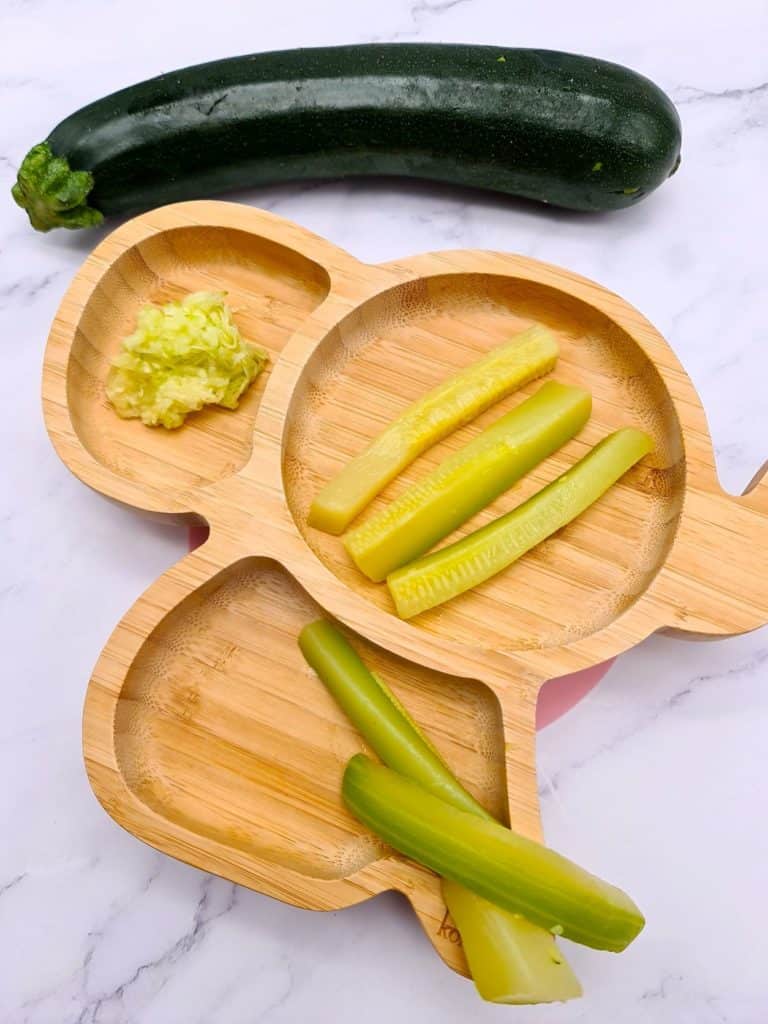
1. Wash your zucchini. 2. Dry it with a clean towel. 3. Cut it into sticks. To guide you on the size of the sticks: they should be longer than your baby's hand and about the width of your index finger. 3. Steam your sticks. 4. Add a drizzle of vegetable oil.
How can you tell if zucchini is cooked enough? Take a piece you've just cooked and place it in your mouth between your tongue and the roof of your mouth: if you can easily press it against the roof of your mouth, it's cooked. Be careful not to overcook the zucchini sticks, though, as they'll need to be held by your baby.
Around 8-10 months: grated raw zucchini
1) Wash your zucchini 2) Dry it with a clean towel 3) Grate it
Once your baby is more comfortable with the pincer grasp (holding food between their thumb and forefinger), don't hesitate to offer them this new format. In addition to helping develop their fine motor skills, this will allow your baby to discover zucchini in a different way.
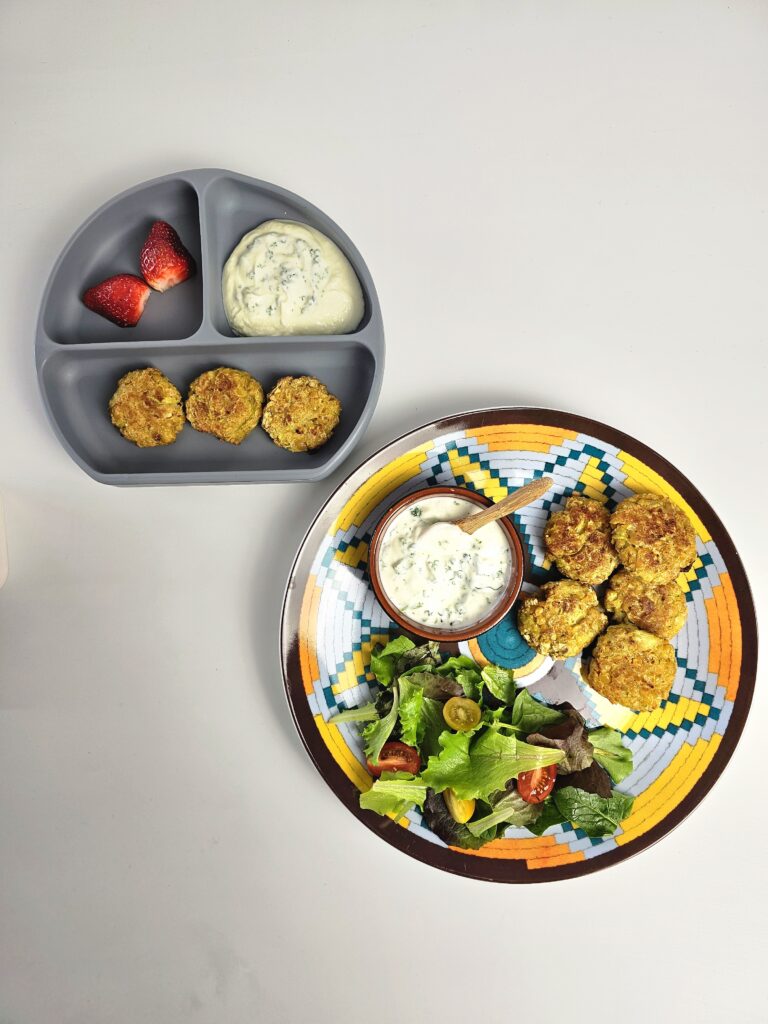
Now that baby is familiar with cooked and raw courgette, why not incorporate it into recipes? Find plenty of courgette recipe ideas here: “Cotton Recipes”.