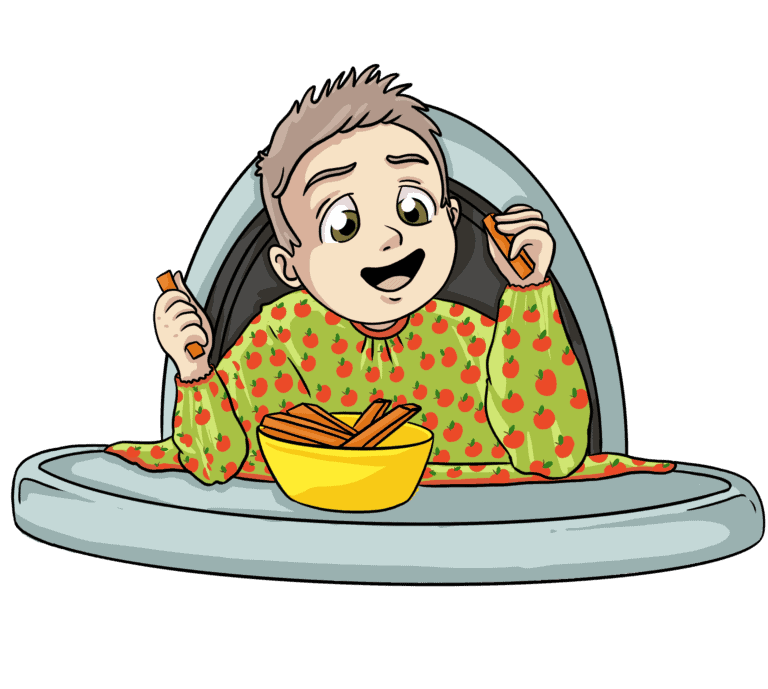
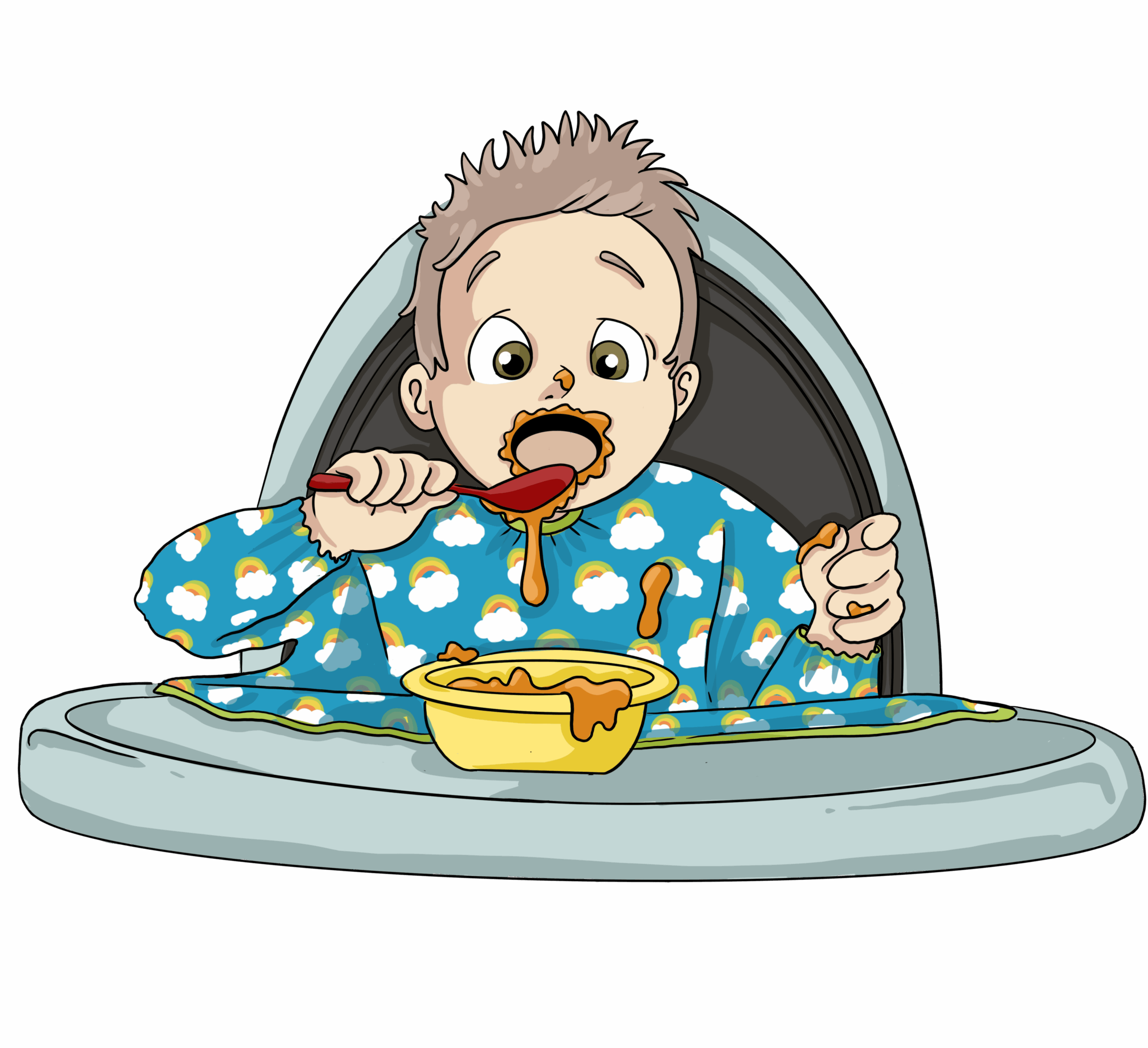
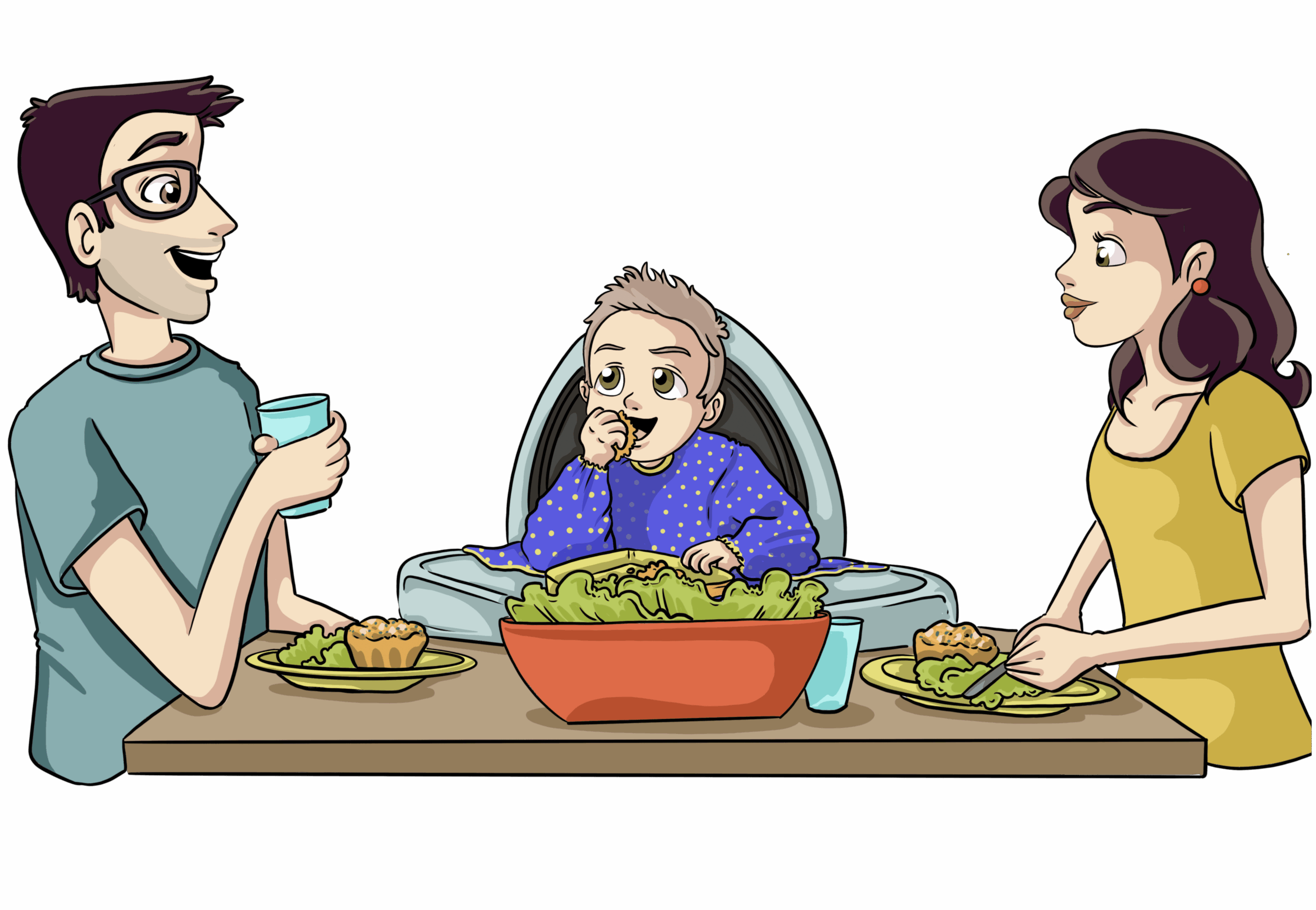
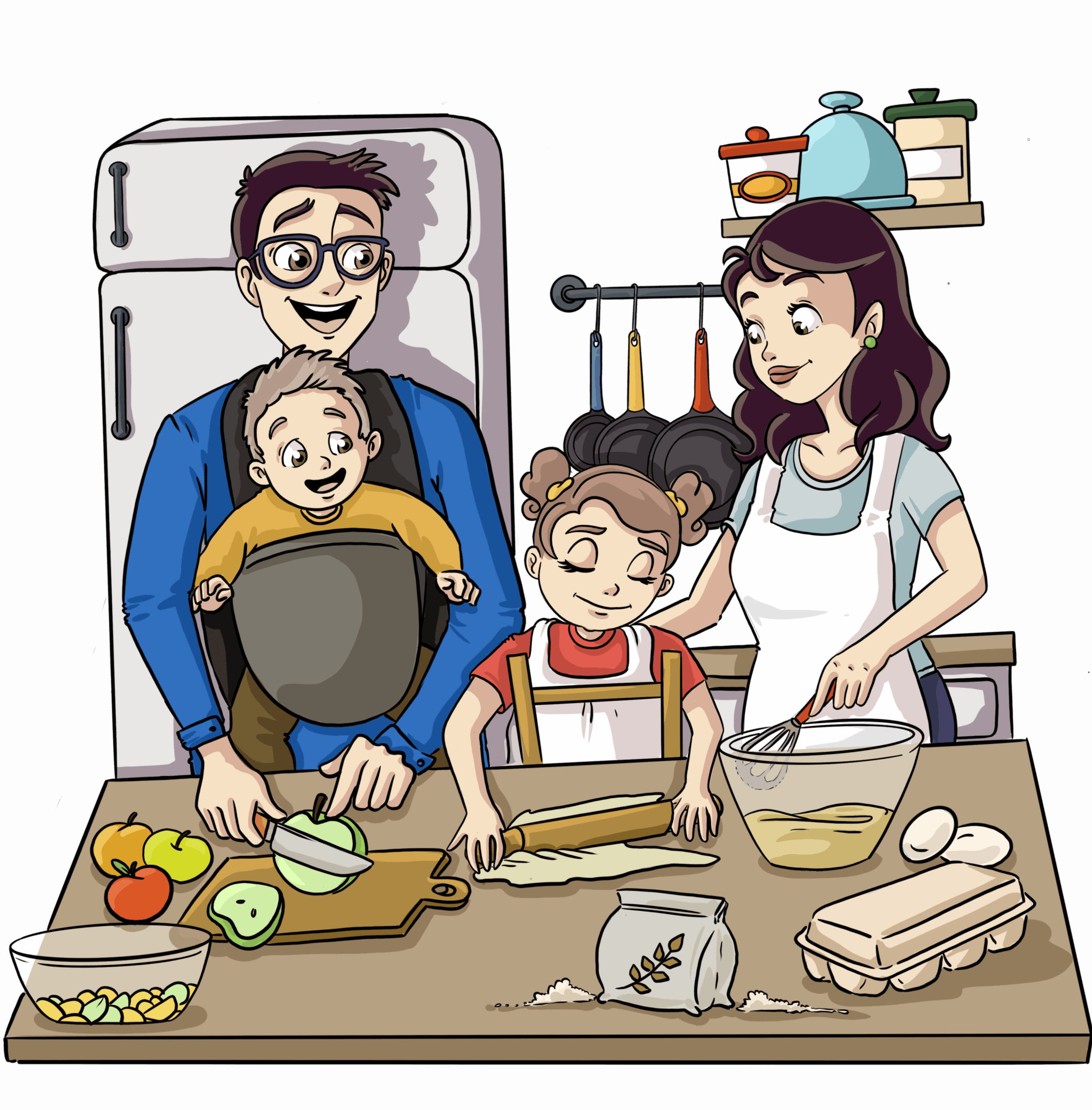
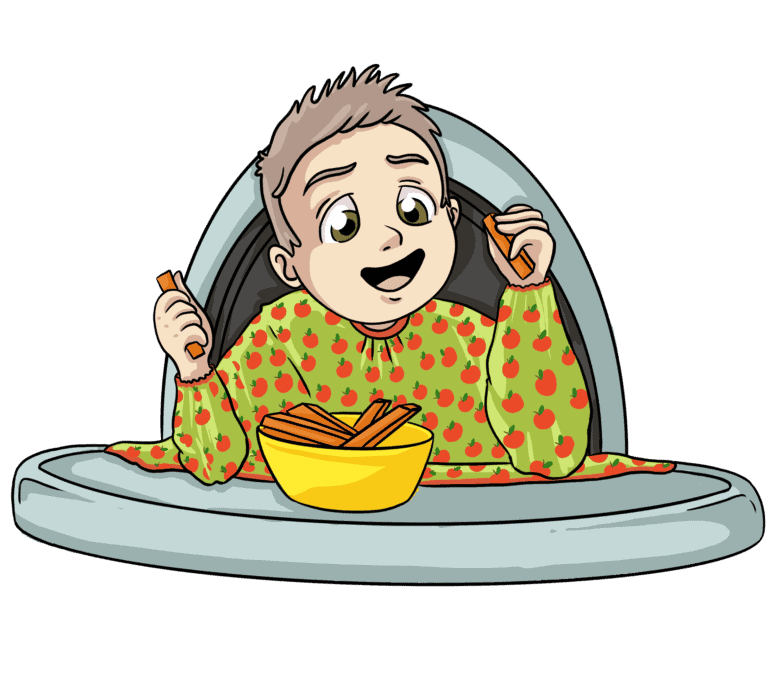
La DME est une approche différente de la diversification classique : nous sortons des purées traditionnelles et des petits pots donnés à la cuillère, pour permettre à bébé de découvrir les aliments en toute autonomie. Bébé pourra bien entendu également manger des purées et d’autres textures lisses, mais nous changerons la façon dont nous lui proposerons (nous utiliserons des transporteurs ou cuillères préremplies). Parce que dans la DME, bébé est acteur de son repas, c’est lui qui amène les aliments à sa bouche et qui gère les quantités. Notre rôle ? Proposez des aliments sains et variés dans un formats sécuritaires et privilégiez le fait-maison pour éviter le sucre ajouté dans les préparations de bébé
La DME ce n’est donc pas juste donner des morceaux à bébé, c’est beaucoup plus vaste que cela : C’est une vraie philosophie alimentaire !
Nous ne le répèterons jamais assez : chaque enfant est différent. Les notions d’âges sont toujours à prendre avec des pincettes, voici cependant quelques critères qui vous permettront de bien identifier le moment où votre bébé est prêt à commencer la DME :
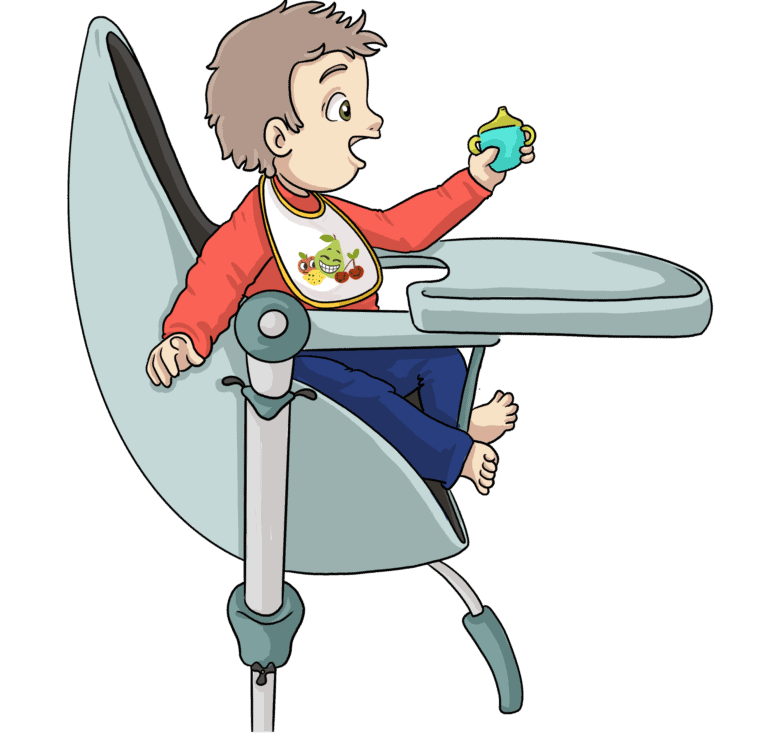
Bébé a 6 mois et il sait maintenant se tenir bien droit quand il est assis dans sa chaise.
Il sait tourner la tête de gauche à droite et amener seul des objets à sa bouche.
Lorsque l’on parle de DME, il y a souvent deux même réticences qui reviennent chez les parents.
Premièrement, la peur de l’étouffement. Rassurez-vous, vous proposerez toujours des aliments avec des textures et formats adaptés aux capacités de bébé. Les études montrent également qu’il n’y a pas plus de risque d’étouffement en diversification classique qu’en DME. Nous avons d’ailleurs souvent tendance à confondre l’impression d’étouffement avec le fameux réflexe gag ou nauséeux qui peut parfois être assez impressionnant.
Deuxièmement, les parents craignent souvent que bébé ne mange pas ! Pourtant, lors de la période de la découverte alimentaire, c’est tout à fait normal ! Bébé va se concentrer sur la découverte par les cinq sens de la nourriture et il mettra finalement peu d’aliment en bouche. Mais ne vous tracassez pas, entre 6 et 8 mois le lait couvre plus de 80% de ses besoins énergétiques. Donc, même si bébé mange peu, voire presque rien, ses besoins énergétiques seront couverts.
Que vous choisissiez la diversification classique ou la diversification menée par l’enfant, il faudra dans les deux cas connaître quelques règles de sécurité de base ainsi que se renseigner sur les différents aliments à risque ou à éviter.
La diversification alimentaire est une grande étape dans la vie de bébé, mais également dans la vie des parents ! Chaque étape amène avec elle son lot de stress et de questions :
Comme pour tout, le plus dur, c’est de commencer ! Les débuts seront sans doute laborieux, votre bébé mettra peut-être du temps à s’acclimater, mais rappelez-vous que chaque enfant évolue à son rythme et c’est tout à fait normal. En débutant, vous vous poserez certainement quelques questions comme:
Vous avez terminé votre menu pour débuter ? N’espérez pas retourner aux purées et panades. Bébé s’amuse à présent tellement en mangeant qu’il va vouloir découvrir de nouvelles textures, de nouveaux aliments, de nouvelles saveurs …
Fini la corvée du repas à la cuillère, le repas s’est transformé en zone de jeu et de découverte et vous verrez que c’est aussi amusant pour vous que pour lui ! Pour continuer à faire découvrir de super recettes à bébé, abonnez-vous pour avoir accès à toutes nos recettes.
En réalisant toutes ces nouvelles recettes, vous vous poserez sans doute encore quelques questions comme:
Recevez gratuitement notre GUIDE sous format PDF à imprimer. Vous y trouverez:
les règles de sécurité à respecter
les points importants à connaitre
le menu de la première semaine DME de Bébé
Nous utilisons des cookies pour vous garantir la meilleure expérience sur notre site web. Si vous continuez à utiliser ce site, nous supposerons que vous en êtes satisfait.