When should you start feeding the baby?
This is undoubtedly one of the questions parents ask themselves most often when introducing solid foods. Between advice from family and friends, differing opinions, and information found everywhere, it's not always easy to know what to believe.
So, when is really the right time to start baby-led weaning ( BLW )?

Why wait 6 months to start BLW ?
For a long time, it was advised to introduce purees around the age of 4 months. However, recommendations have evolved as scientific research has progressed.
Before 6 months, a baby's digestive system is still maturing. Their body is not always ready to properly digest solid foods.
Moreover, up to this age, breast milk or infant formula largely covers the baby's nutritional needs .
After 6 months, baby's needs gradually change and the discovery of foods then becomes complementary to milk.
But age alone is not enough to determine if a baby is ready.

Signs that show baby is ready for BLW
Every baby develops at their own pace. Some will be ready a little before 6 months, others a little after.
To start BLW safely, several signs of development are important:
✔️ Baby is approximately 6 months old
(this refers to the corrected age if the baby was born prematurely)
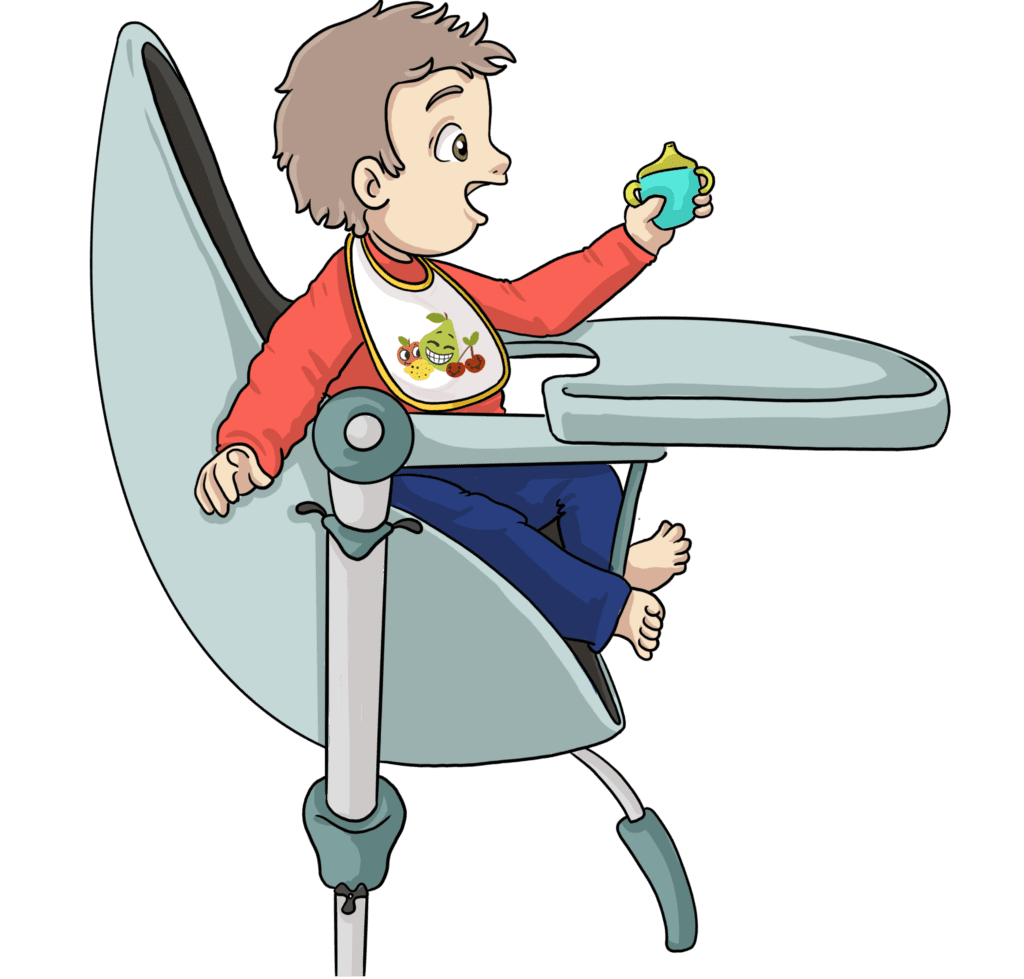
✔️ Baby sits well with good support in his high chair
✔️ Baby can turn his head from left to right
✔️ The baby grabs objects and puts them in its mouth
✔️ Baby shows interest in adult meals
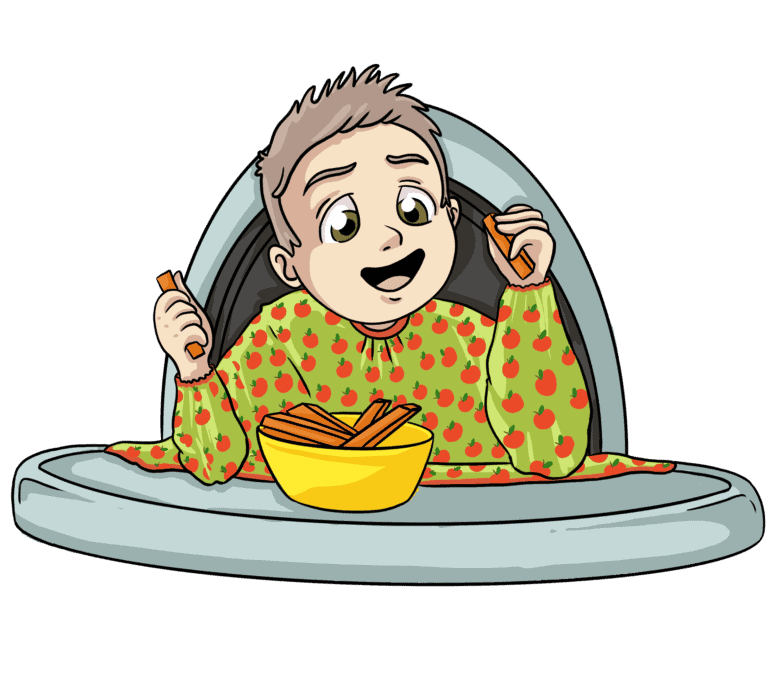
At this stage, the baby is able to grasp food with their whole hand and bring it to their mouth independently. The pincer grasp will come later.
These motor skills are essential to starting BLW safely.
Don't rush
Starting weaning is an important step and often eagerly awaited by parents.
But it is common to feel a certain amount of pressure, especially from those around you:
“You’re still only giving him milk?”
“He should be trying other things by now.”
However, there is no urgency .
Your baby will have a whole lifetime to discover foods. Waiting until they are truly ready allows you to start weaning under better conditions.
Beware of false alarms
Many parents believe that a baby is ready to eat as soon as he looks at their plate with interest.
But in most cases, this behavior is simply related to imitation .
The baby has been observing what adults do for several months and is naturally curious. This does not necessarily mean that he is ready to eat.
The true signs of readiness remain motor and postural skills.
What to do while waiting for the baby to be ready?
Even if the baby is not yet ready to eat, he or she can still participate in mealtimes.
Seating your baby at the table with you is an excellent way to introduce them to the atmosphere of family meals.
Here are some ideas to stimulate their curiosity:
offer him rattles of different textures to explore his mouth
give him cutlery or a plastic cup
to allow him to handle secure objects
These little experiences help baby develop motor skills and become familiar with mealtime gestures.
The 4 essential steps to start BLW
Before offering the first foods, check these four points:
🥄 Baby is approximately 6 months old
🪑 Baby sits well with good posture
✋ Baby grasps objects and puts them in their mouth
👀 Baby shows interest in meals
When these elements are in place, child-led weaning can begin under good conditions.

In summary
Starting BLW does not depend solely on the baby's age.
Observing his motor skills, posture and interest in meals helps to determine if he is ready to discover solid foods.
Of course, these guidelines apply to a healthy baby who is following their growth curve correctly .
Every baby develops at their own pace. With a little observation and trust, the right moment will always come.
An answer