Choosing to feed your baby a vegetarian diet is a personal decision. However, it's important to consider certain factors to ensure your baby receives all the nutrients they need for growth and development.
Is it possible to have a vegetarian baby on BLW ?
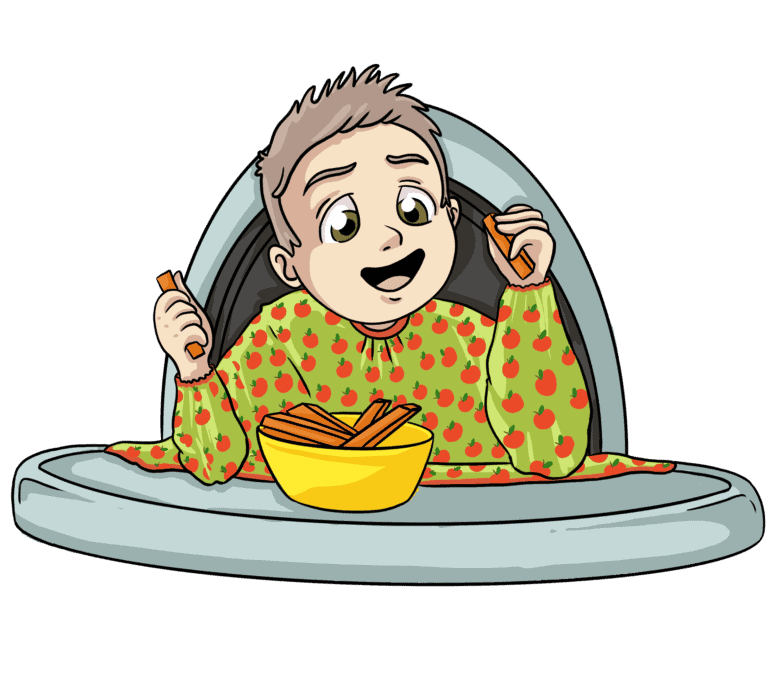
Baby-led weaning is perfectly compatible with a vegetarian diet . It's entirely possible to let your vegetarian baby discover food at their own pace by offering a variety of foods that are appropriate for their development .
In BLW Baby-Led Weaning), the aim is to offer babies a nice balanced plate at mealtimes, composed of the five food groups: proteins, fats, fruits and vegetables, starches, and finally, dairy products. However, in a vegetarian diet, proteins are removed from this balanced plate. It will then be important to ensure that these proteins are replaced with vegetarian foods that provide just as many nutrients for the baby!

Replacing animal proteins in baby's diet
Protein is essential in a baby's diet, as it provides a good source of iron, vitamin B12, and Omega-3 fatty acids . How can you replace animal protein with a vegetarian alternative that offers the same nutritional benefits for your baby? There are several delicious alternatives perfect for your little one's healthy development. You can offer your baby legumes such as lentils, chickpeas, or beans. Eggs are also a good source of protein for babies on a vegetarian, rather than vegan, diet. Another alternative to animal protein is tofu , which provides the same nutritional value!
As a reminder, a baby's protein intake should not be too high, as their kidneys are still developing. For a baby under one year old, it is recommended to offer 10 grams per day . This increases to 20 grams per day until they are two years old, and finally to 30 grams per day after your little one turns three.
Preventing potential deficiencies in a vegetarian baby

Like anyone starting a vegetarian diet, your little one may experience some deficiencies . By being well-informed, you'll have the opportunity to take all the necessary steps to prevent these deficiencies! You'll need to pay attention to their intake of iron, vitamin B12, vitamin D, vitamin C, calcium, omega-3 fatty acids, and zinc so that your baby gets all the nutrients needed for healthy development.
Iron is abundant in animal proteins. When eliminating these from a baby's diet, it's important to ensure that the baby receives iron-rich foods at every meal. Iron in several foods such as cereals , legumes , green vegetables , and eggs .
Like iron, zinc in legumes , but also in peanuts and walnuts. It will therefore be easy to introduce it into a baby's diet.
Calcium will easily find a place in a baby's diet since it is present in green vegetables , milk and fortified vegetable juices .
As for the various vitamins , they can easily be found in plant-based alternatives. For example, vitamin C is present in certain fruits and vegetables like broccoli and strawberries. Vitamin D found in margarines , and vitamin B12 in fortified plant-based juices . There are many ways to add these vitamins to your baby's diet.
Finally, Omega 3 fatty acids can also easily be found in baby's diet by using flaxseed , canola or soybean or by offering tofu in baby's meals.
It's possible to have a vegetarian baby at home, but you'll need to be extra careful and make sure your little one receives all the nutrients necessary for their healthy development! And above all, don't hesitate to consult a nutritionist who can best help you provide your baby with a nutritious diet!
Photo: © Lune et l'autre