When introducing solid foods to your child, it's a great idea to involve them in meal preparation. This fun family activity allows them to discover the ingredients in their meal before eating them. But how should you go about it?
Involving the baby in meal preparation is a very good thing!
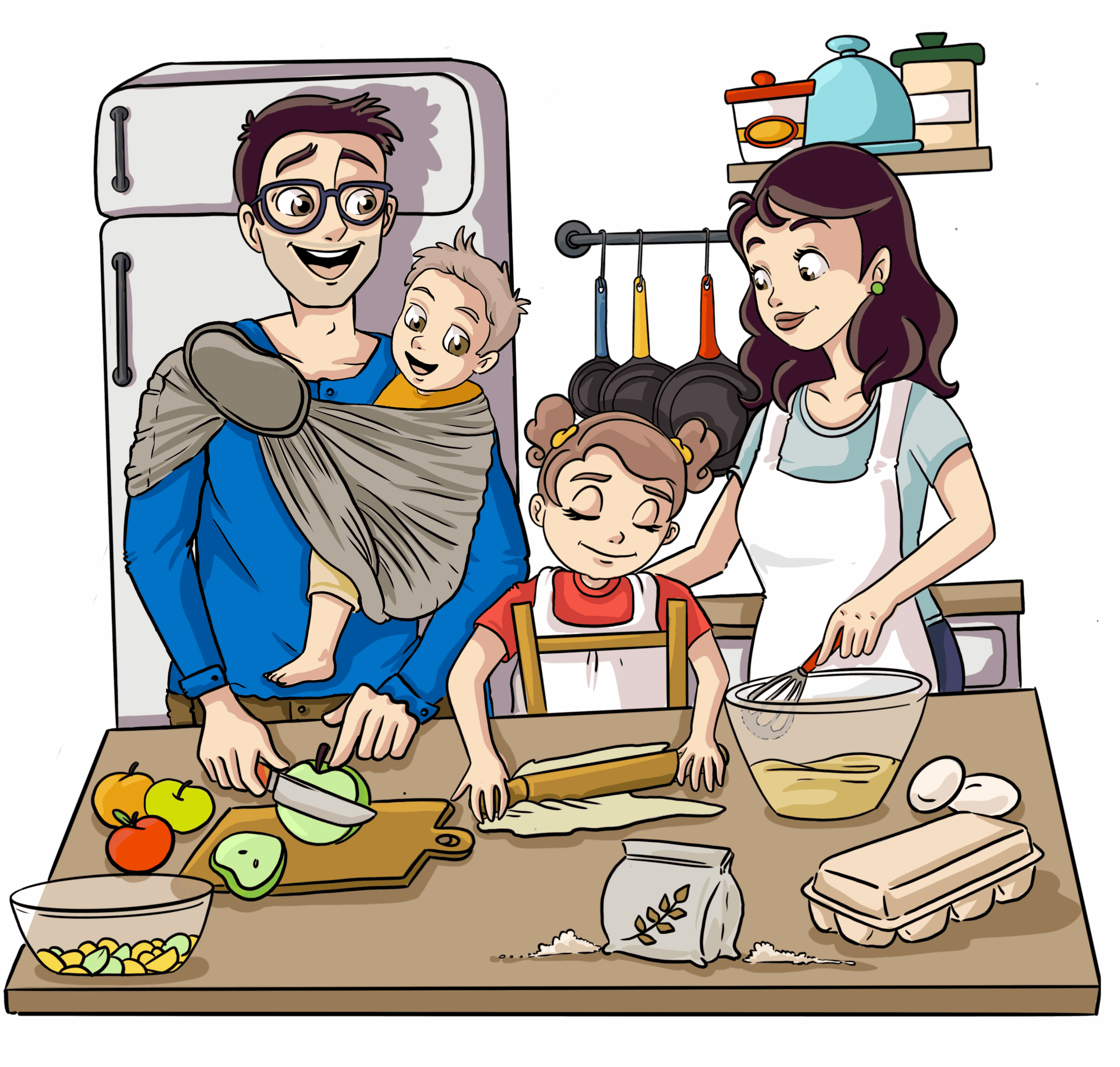
Cooking together as a family allows your little one to discover new flavors, fruits, and vegetables using all five senses while having fun! It's also a great family activity that helps strengthen bonds with each member. But that's not all; this culinary activity done together offers several benefits for the whole family !
Getting started with meal preparation with baby
Introducing your baby to meal preparation starts with choosing the recipe. Offer them several recipes to try. Show them pictures of the dishes so they can choose visually. Begin with recipes you're familiar with so you can manage meal preparation and feeding your baby simultaneously. Later, add recipes your baby hasn't yet tried to the meal selection.
It's also important to establish a few simple safety rules to avoid any kitchen mishaps. Remind your little one about areas that can get hot, utensils that are sharp, etc. Don't hesitate to remind them before each meal preparation.
Every child develops at their own pace; the age ranges for kitchen tasks listed below are for guidance only. You'll know when your little one is ready to take on new tasks during meal preparation. Sometimes, your child will need your help with tasks in the recipe, such as mixing or weighing ingredients.
Cooking with a baby under 1 year old
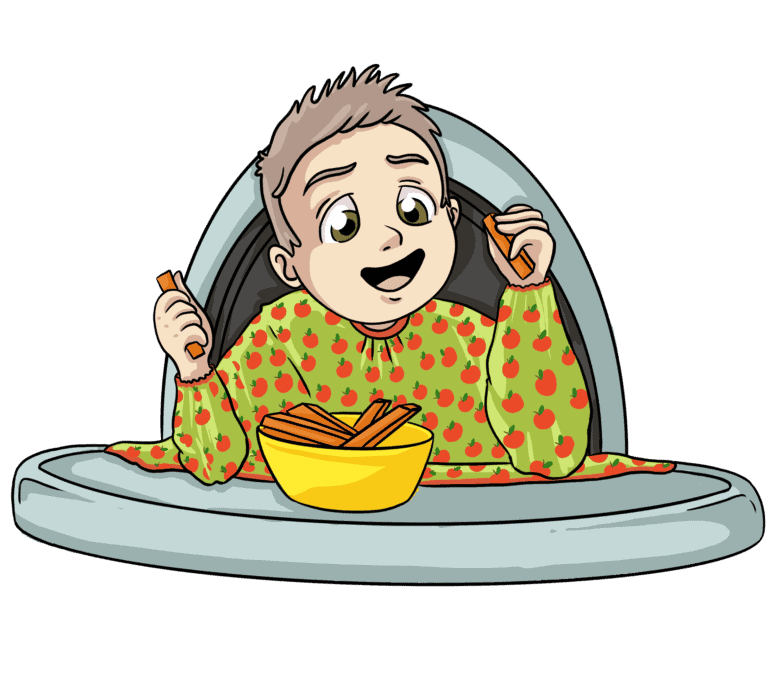
Cooking together as a family starts from a very young age! At first, your little one will sit in their highchair next to you while you prepare meals. They'll be able to observe everything you do and, most importantly, discover the ingredients of the recipe through touch and smell. Don't hesitate to let your little one handle the fruits and vegetables.
At this age, your child is in a phase of imitating all the actions you take every day. When preparing meals, give them a plastic bowl and a spoon so they can reproduce the actions you perform in the kitchen.
Preparing meals with a toddler aged 2 to 3 years
When he is a little older, your child can start to help you with meal preparation by taking certain ingredients out of the cupboards or adding ingredients to the salad bowl.
Your 2-3 year old child will also know how to wash the fruits and vegetables needed for the recipe and especially how to count the ingredients needed such as eggs, fruits, etc.
Cooking with your 3-4 year old child
Around the age of 3 or 4, your child will become a true little apprentice in the kitchen. They will be able to perform more and more tasks, such as mixing ingredients with your help, mashing soft ingredients with a fork, or even forming small balls with their hands. With their fine motor skills developed, your child will be able to start peeling fruits without utensils, such as bananas, clementines, and so on.
Your child aged 4 to 6 in the kitchen with you
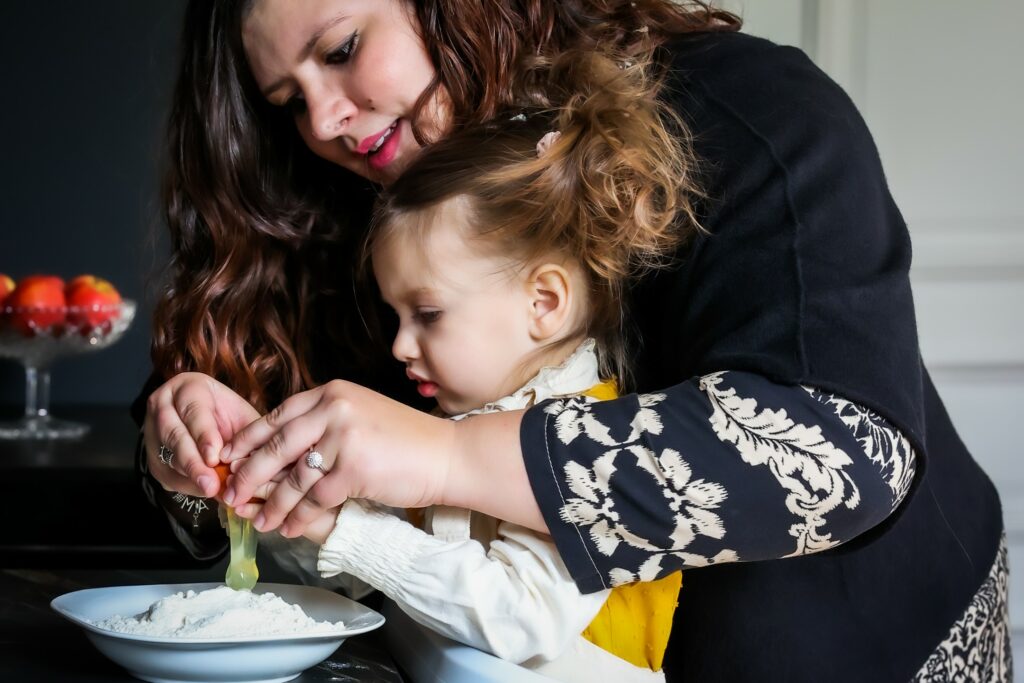
Your child is starting to become a mini-chef in the kitchen; they'll now be able to crack and beat eggs. Whisk the ingredients with your help, and most importantly, use a child's knife to cut soft ingredients!
The little culinary apprentice, aged 7 to 8, helps you in the kitchen
Around the age of 7 or 8 comes the long-awaited moment of weighing ingredients with parental help, using a sharp knife, and, most importantly, using electronic appliances with your assistance. Your child will be proud to be able to use appliances usually reserved for adults when preparing meals!
Photo: © Lune et l'autre
A few tips for cooking with your baby
Before you embark on preparing family meals, discover our few tips that could help you best prepare for this family activity.
Start by preparing your kitchen by gathering the necessary ingredients and utensils. You can create several groups of ingredients and utensils for each step of the recipe. Once your kitchen is ready for meal preparation, call your little one to begin the family activity! When your child is older, they can help you prepare the ingredients and utensils.
The first step is to read the recipe aloud to your little one and explain any slightly more technical culinary terms. You can read the recipe together or let your child read it completely when they're older!
When preparing the dish, give your child tasks they can do independently. Most importantly, complete each step fully before moving on to the next. This way, your child can understand where you are in the recipe and follow along with you.
To ensure that your child can also participate in preparing meals or snacks, you must choose a recipe that matches their abilities.
It's important to remember that your baby is still learning and hasn't yet mastered all their movements. So, accept that there will be little spills, like flour falling on the counter or elsewhere. It's not a big deal; teach your child to clean up together after spills. You absolutely mustn't teach your child that cleaning up a little mess is unpleasant. Let's do it with joy and enthusiasm!
Don't forget to enjoy a delicious meal cooked together as a family!