
During baby-led weaning ( BLW ), it's common for babies to eat little or refuse certain meals, which can worry parents.
Rest assured: this food refusal is very common and, in most cases, there's no reason to be alarmed.
Baby explores before eating
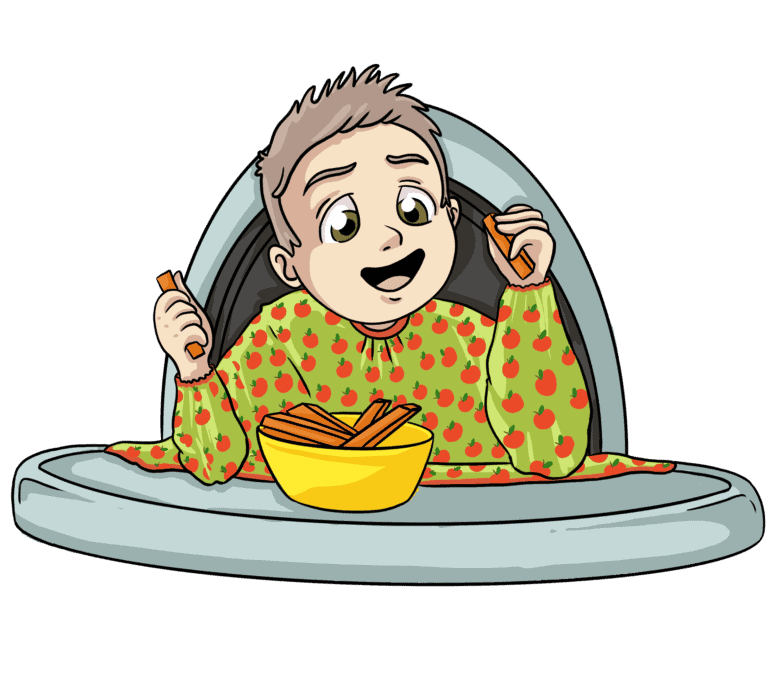
Between 6 and 8 months, the main objective is not to fill the baby's stomach, but to allow him to discover .
Baby touches, smells, observes, crushes, throws (yes, even that's part of the experience 😅)… and sometimes, he puts very little food in his mouth.
👉 And that's totally okay.
At this age, breast milk or formula still covers more than 80% of their energy needs. So, even if baby eats "three crumbs and two slices of zucchini," they are getting what they need.
The thousand reasons for saying “no thank you”
Just like us, babies don't always have the same appetite. Their desire to eat can vary depending on many factors:
teething 🦷
fatigue 😴
growth peaks
a minor cold or a passing discomfort
or simply… less hungry that day
In short, there's no mystery: a baby's appetite isn't constant .
Some days they devour food, other days they just pick at it.
And that's perfectly normal.
What really matters
Rather than focusing on each meal individually, let's look at the whole picture:
the growth curve regular?
Is his general condition
Is he making progress in his acquisitions?
If the answer is “yes” to these three questions → breathe: baby is fine. 🌟
Parental pressure (and how to break free from it)
We, as parents, often carry a heavy legacy around mealtimes:
"You have to finish your plate!" 🍽️
Social norms that make us compare babies with others
The fear that he eats too little… or sometimes too much!
But in BLW ), the golden rule is simple: baby is in charge.
Portions aren't weighed, a variety of foods are offered, and their appetite is trusted. Baby instinctively knows what their body needs.
Inspire desire ✨
What if we transformed mealtimes into a positive experience rather than an ordeal?
Here are a few simple tips to encourage your baby to try new foods:
Warn the baby a few minutes before the meal, so that he can prepare himself mentally.
Eat at the same time as him (shared meals are much more attractive).
Eating the same food as your baby : guaranteed mirror effect!
Vary the presentation (a carrot in sticks is not as successful as a carrot in slices 😉).
Involving your cuddly toy or doll in the meal can make the moment more fun.

In summary
Not eating or eating very little is a normal part of weaning.
The important thing is that baby discovers , explores , and develops a healthy relationship with food. Baby BLW isn't about quantity but about gradual learning.
So if your baby refuses their meal, keep smiling: it's not a failure, but simply a step on the path to independence. 💕
An answer