Baby-led weaning allows you to introduce your baby to all the foods and flavors the world has to offer. Starchy foods will also be part of your little one's diet!
Starchy foods in a baby's diet
From the very beginning of weaning, it's important to offer your baby little starchy each meal . This way, you can spread your little one's energy intake throughout the day. Starchy foods are made up of complex natural sugars , including starch, also known as slow-release carbohydrates, which allow our bodies to build up energy reserves to face each new day.
There are three main groups of starchy foods: legumes , which are rich in vegetable protein and fiber; tubers ; and cereals which are rich in fiber.
Starchy foods are therefore part of the basics of nutrition and are also found in the composition of a balanced plate for your little one.
Which starchy foods should I choose for my baby?
Many starchy foods can be discovered by the baby during the child-led introduction of solid foods.
Baby will be able to discover legumes using lentils, chickpeas, white beans, quinoa, etc.
Sweet potatoes and potatoes, being tubers, can be enjoyed by your little one.
Your baby will discover the taste of starchy foods, often referred to as " cereals, " such as rice, pasta, bulgur, polenta, semolina, and so on. It's recommended to start with simple starches that are easily digestible for your baby. Later, you can introduce whole grains into your baby's diet. You can also introduce this category of starches to your baby in other forms, such as bread , wraps, rice cakes, and so forth.
With so many starchy foods to offer your little one, you can easily keep things interesting ! You can even discover or rediscover certain starchy foods by preparing meals for your little one.
How to cook starchy foods for a baby?
Starchy grains are too small to be offered to babies on their own, with the exception of large pasta shapes. However, you can introduce them to your little one by incorporating them into recipes such as rice balls, pasta bites, bulgur or quinoa salads, pasta with sauce, etc. When cooking starchy grains for your baby, it is strongly advised against adding salt to the water , as a baby's kidneys are still too immature to digest salt properly.
Legumes are often too small to be eaten whole , and some are even considered high-risk foods . To ensure they are offered to babies safely, it's important to present them in recipes specifically designed for infants. Chickpeas and white beans, for example, can be pureed and fed to babies using a pre-filled spoon or a baby food carrier .
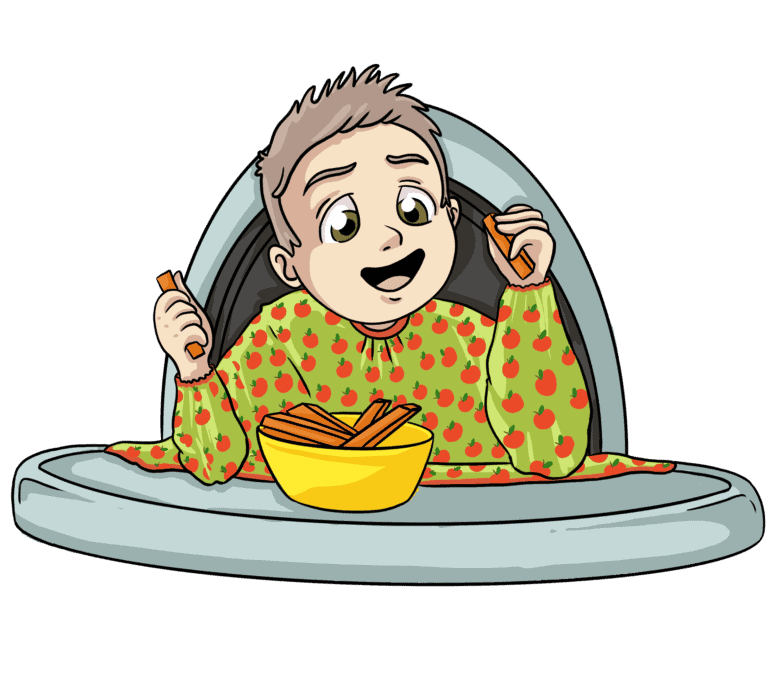
For starchy tubers , it's much easier. You can offer them as steamed sticks or in delicious recipes adapted to your baby's development.
Many recipes made with starchy foods are waiting to awaken your little one's taste buds .
Photo: © Lune et l'autre
Starchy foods should be part of your baby's diet from the start of BLW . Prepare delicious recipes with starchy foods to help your baby discover all these flavors and, above all, the pleasure of eating pasta.